MATADOR BOLERO
Jonathan Rosado, Kansas Bowling
Everybody wants to work with existing IP or do the next Marvel movie. I don’t want to sound like a dick, but I’m just not interested in it at all. I'm interested in experimental film.
TESS POLLOK: Matador Bolero is your psychedelic new feature film. It’s erotic, it’s surreal, it’s about crime and computers. What were you thinking about that later became this film?
JONATHAN ROSADO: I had no idea what I was shooting at the time. I was shooting random things and I figured I would piece the scenes together later. It was a slow build of, like, 18 months of putting all the shots together.
POLLOK: Do any of the themes or ideas relate to your earlier work? What are your driving interests as a filmmaker?
ROSADO: It’s similar to what I’ve explored with my other films. I’m interested in the aesthetic of exploitation. I don’t see it as retro, more as a return to what classic American cinema looked like. I’ve been trying to bring that element more to the forefront of modern indie stuff. All of my films have been experimental, very visually abstract and heavy.
POLLOK: What draws you to that aesthetic?
ROSADO: A lot of different things, honestly. My background is originally in music. I’m nerding out here, but I feel like ‘70s progressive rock stage theatrics have played a huge influence on my cinematic imagination. Genesis coming out in these elaborate costumes to perform their concept albums. Certain films, too, obviously: Antonioni, Kenneth Anger.
POLLOK: You shot the film on Super 8. What was that like?
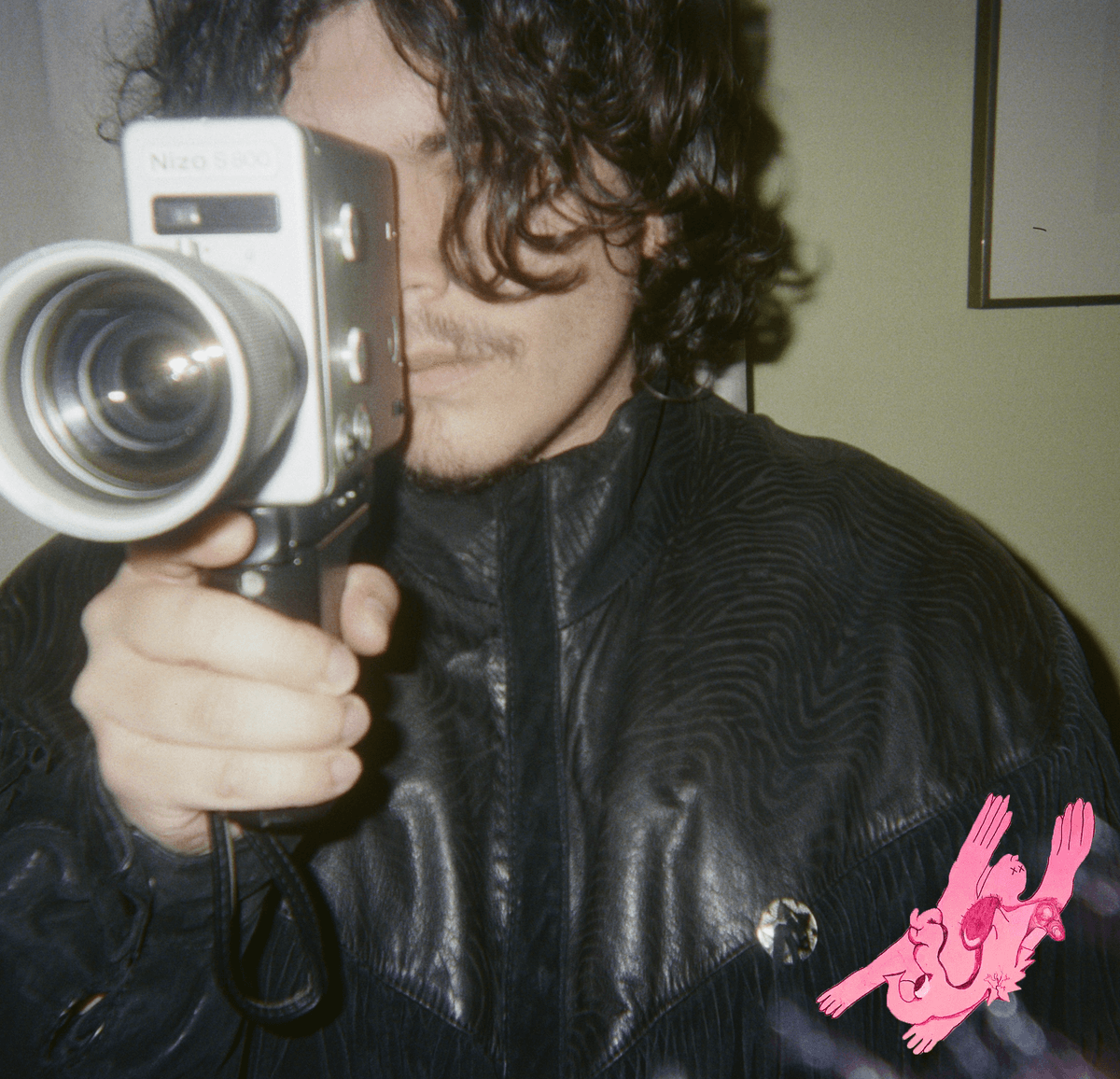
ROSADO: I think, to my earlier point, I wasn’t trying to make it look retro but I did want it to look classic. In the heyday of cinema, when people would actually go to the theatre, there were, like, three channels on television. People weren’t bombarded with media all the time. Today we live in a landscape where people are constantly bombarded with digital media. I just think it’s tiring on the eyes. I wanted a breath of fresh air from all the digital cinema stuff.
With all my movies, I don’t have a full script when I start. I usually have a vague idea of what the movie’s going to be about and I have an outline for some dialogue. It’s really about using the story as a vehicle to explore these aesthetics. It’s a very loose thing, maybe sort of a French new wave approach.
POLLOK: I want to throw this over to you, Kansas, because you acted in the film. How did it feel working without a script? Was it easier or harder to inhabit the character?
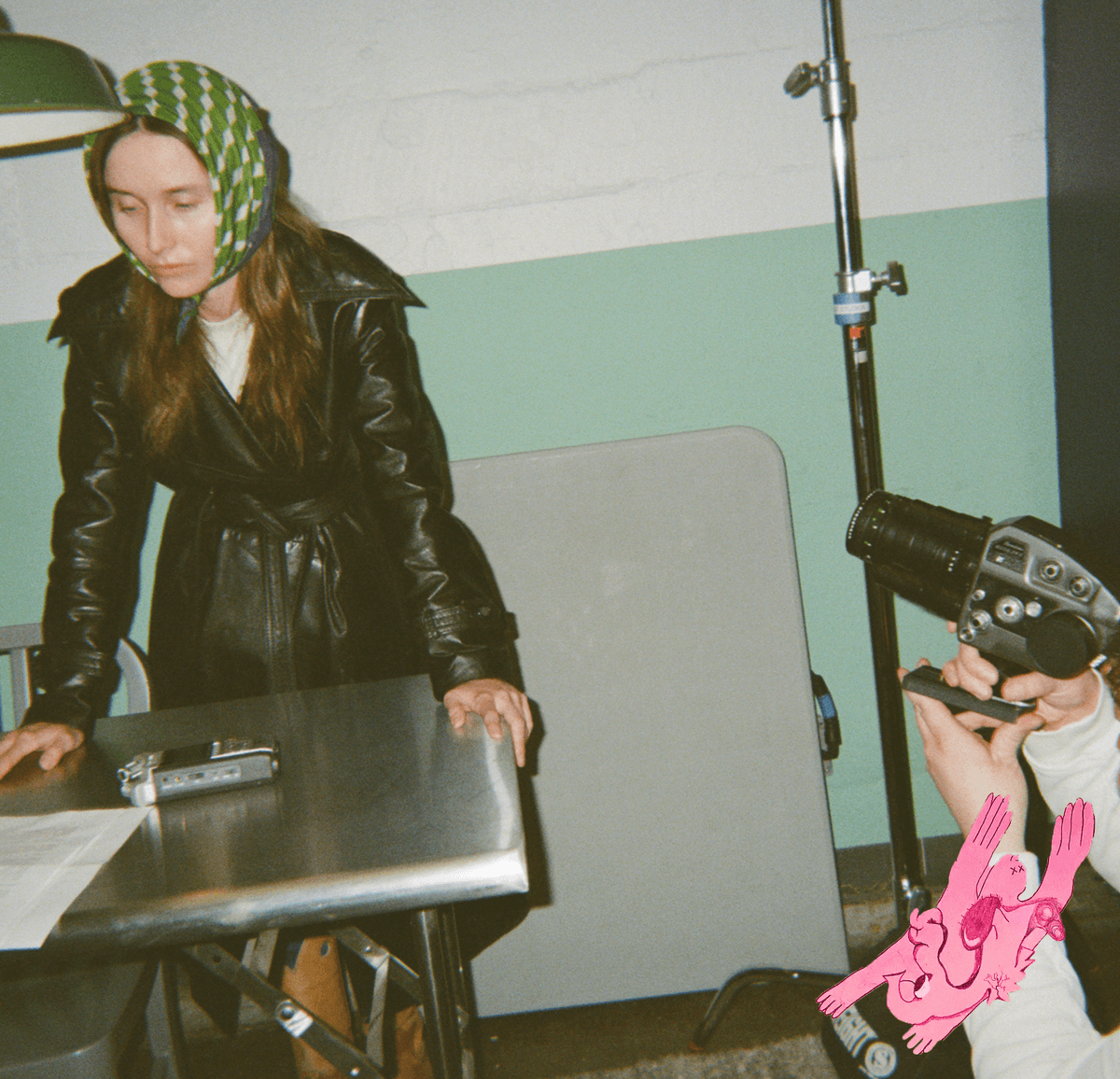
KANSAS BOWLING: Jonathan just sent me my scenes, so I didn’t know anything else about the movie. I only knew that I had a detective storyline. I haven’t seen the movie yet so I don’t even know what happens beyond my one storyline. I kind of played my character like she was a cartoon, that felt right. Because I don’t look like a detective.
POLLOK: Jonathan, you mentioned that you have a background in music. You did the score for the film as well, correct?
ROSADO: Yeah, I composed the music and recorded it with my girlfriend, who’s also the executive producer. I’ve been in a band with her since before we even made the movie and we scored my other two films as well. I had songs for the movie made before we even filmed anything. We also composed while we were working, like, we’d shoot two or three scenes, edit that together, and come up with a song, just for that section. We just continued on like that until the movie was finished. So we were making music up until the last second, it was a really drawn out process.
POLLOK: It’s a moody score. What were you thinking about and feeling while you were making the music?
ROSADO: You’re spot on with the moody comment. We were going for something very atmospheric, more in line with what would typically be associated with, like, a European art film. I wasn’t necessarily trying to make the audience feel a certain way. It was more about how it complemented the aesthetic elements of the film, visually.
POLLOK: You keep referencing experimental cinema and European films. Are those big influences for you? What about American movies?
ROSADO: Maybe I shouldn’t say this, but we’re in kind of a shitty time right now for American movies. Maybe not all of them, but definitely Hollywood. I would compare it to the ‘80s, if anything, where it’s all about the blockbuster. Everybody wants to work with existing IP or do the next Marvel movie. I don’t want to sound like a dick, but I’m just not interested in it at all. But, to each their own.
POLLOK: What do you like more about experimental cinema?
ROSADO: Experimental films have been around, basically, since the beginning of movies. I kind of think of it as how, in the fine art world, people eventually stopped painting photorealistically and eventually you got people like Van Gogh and, beyond that, completely abstract stuff like Jackson Pollock. I just don’t feel like there’s a lot more to be done in the realm of conventional cinema. Like, I think it would be kind of arrogant of me to think that I could make a better film exploring mental illness than John Cassavettes. I don’t think I can make a better love story than someone else’s classic love story film. I see experimental film as a way of moving forward with the genre.
POLLOK: What about you, Kansas? What inspires you about movies?
BOWLING: I make my own movies and I act. When I act in things, I usually act in horror movies. That’s kind of just the genre I’ve fallen into, which I love and I’m not complaining. All of my favorite movies are from the ‘60s and ‘70s, but I enjoy new films more than Jonathan. I just love going to the movies and seeing new movies. I think different movies serve different purposes, movies can do anything and be anything. There’s a purpose to all the different genres, I think. It’s all welcome in my world.
POLLOK: You’re peaceful. You’re a diplomat.
ROSADO: I loved Radu Jude’s Dracula. It totally blew me away. When it was over, I wished I’d seen it earlier because it would have made me shoot more scenes. It was that inspiring.
POLLOK: I have to watch it. Kansas, what about you?
BOWLING: Different movies have influenced me at different times in my life. When I was a really little kid, it was Creepshow. As a teenager, it was Texas Chainsaw Massacre. My all time favorite movie is Orson Welles’ F for Fake. My current obsessions are Orson Welles and Robert Altman. I’m getting into Westerns right now. I think Robert Altman’s Buffalo Bill is one of the greatest movies of all time. I love horror movies, I love campy movies, I love old genre movies where they were just, like, we’re going to make a motorcycle movie or a military movie.
ROSADO: I might jump in here, actually, and say that Kansas and I share a favorite film. Midnight Cowboy by John Schlesinger.
BOWLING: Yeah, that’s one of my favorite movies too.
ROSADO: I think it’s a perfect movie.
BOWLING: I think Midnight Cowboy is the greatest anti-city movie of all time. What’s really great about it is that there’s so many things you can take away from it as you get older and your perspective changes. People call it a gay love story, but I don’t get that from it at all. To me, it’s a movie about depravity and how cities will corrupt you and destroy you. But that’s completely different from how I saw it when I was younger. People get different things out of different movies at different times in their life, which is what’s so great about them.
POLLOK: Jonathan, how does this film relate to your other work?
ROSADO: All my films explore a similar language. My last film was motivated by my interest in conspiracy theories and how they’ve become a part of mainstream culture. This one is more about entering the Age of Aquarius, man merging with machine for better or for worse. I wouldn’t say they share a throughline thematically, but they do aesthetically.
POLLOK: What advice would you give to other experimental filmmakers? Were there challenges with the budget?
ROSADO: If you’re serious about art, there’s going to be challenges no matter what you’re doing. Whether it’s movies, music, or painting doesn’t even matter. This film was challenging because it was so low budget, but as much as I’d like to work with a huge budget, that always comes with a bunch of people at a desk telling you what you can and can’t do. Personally, I see it as more empowering than not, because, at the end of the day, there’s no one saying I can’t film what I want. I don’t see being indie or experimental as a negative. If you have millions of dollars, you can just keep throwing money at all the issues that arise throughout the shoot like a band-aid. But that’s not necessarily the best decision, artistically.
A lot of my contempt for American cinema today comes back to money. Studios are scared to put up the money for something that isn’t going to give them a return on their investment. We’ve had similar eras in popular filmmaking before now, like in the ‘60s and early ‘70s when the studios started to fail. That was when they let people like Brian DePalma, Martin Scorsese, and Francis Ford Coppola come in and they became the new vanguard. They ended up making some incredible films along the way. But some things are positive–I think Warner Brothers just opened up a new indie sect in their film distribution, which is a move in a positive direction.
POLLOK: Do you have a take on Anora?
ROSADO: It wasn’t for me.
POLLOK: You’re very polite. Kansas, what about you? How does indie filmmaking make you feel?
BOWLING: As an actor, I have my ways of interpreting things, but it’s always up to the filmmaker. I’m just there to fulfill a vision. I take whatever approach I need from them.
POLLOK: Are there influences outside the realm of cinema that inspire you? Either of you.
ROSADO: I’m inspired by painting. There was this Jean-Michel Basquiat show a few years ago in New York. I’ve obviously seen his work before but I’d never seen it in person and it had a big impact on me at the time. I like a lot of visual art. I like art. I think I air more on the surreal side, like Hieronymous Bosch.
POLLOK: Kansas, how do you separate acting from filmmaking?
BOWLING: Acting’s really fun because I can just show up on a set and I don’t have to worry about every little thing. It’s just one little thing I have to worry about. Filmmaking is completely different, it’s just such an expansive vision. I enjoy acting because it gives me a way to be a part of other people’s projects, in a small way. It gives me a chance to be a part of other people’s worlds.
JONATHAN ROSADO is an experimental independent director and composer. His latest film, Matador Bolero, is opening in New York on June 11.
KANSAS BOWLING is a director and actress.
TESS POLLOK is a writer and the editor of Animal Blood.
← back to features